Wednesday, August 27, 2014


Tuesday, August 26, 2014
Summer Harvest

My garden is bursting at the seams. I
have been up to my eyes in cucumbers, tomatoes, arugula, pumpkin, peppers,
eggplant—the list goes on! I try and dump produce on any soul who stops by the
house, but it isn’t enough.
Mind you, this is my first garden, so
the whole thing has been an experiment. My thoughts were, “is this shit even
gonna grow?”—way back in April when I plunged my hands in the soggy
manure-laden soil.
The gardening process has been a
labor of love. In the beginning, I weeded every other day and took time to
examine each plant in their fragile nascence. If the temperature dropped below
60, I quickly rushed home to cover the boxes. At my first harvest—mostly
strawberries and spring greens—I was twitterpated. There’s nothing quite like
eating a meal you have grown yourself. The food tastes so fresh! It’s almost as
if you can feel the life force you are consuming. You realize how ‘dead’ grocery
store produce really is; it’s no wonder when majority of our grocery fruits and
veggies travel all the way from equatorial zones so we can be supplied with any
and every lifeform we desire 12 months out of the year—its fucked.
In the modern world, we have become
desensitized to many natural forces. We have let our seasonal compass rust and
in that we have lost a sweet patience and connection to our food that is
cultivated alongside the seedlings. There is no greater feeling than waiting
for your berries to ripen or the tomatoes to redden, and then gorging for a few weeks at t time.
Blackberry-flavored everything and bruschetta for daaaaayze.
Of course, it’s not always
flower-children and Indian summer picnics. Nature is a reflection of our own
internal seasonal energy—something I have never listened to before but is ripe
with lessons. Leading up unto the summer solstice, we are all
growing--planning, planting, watering, waiting for the sun to shine and our
explosion of energy to begin. I certainly felt this way—manic almost, like I
had a fire under my ass and I needed to do everything.
In that time, I moved to a new city, got two jobs, a new house full of new
roommates, and began training for a marathon—just for shits and giggles. This
is spring and early summer energy at its finest.
Now that summer is waning, we’re all
exhausted. The plants are dumping
their energy into their fruits in a way of sluffing off that long-cultivated
energy. Like, ‘here take it all, I’m done.’ We can recognize that same urge
ourselves— ‘yeah, I’m ready to layer up for fall and tuck away my SPF.’
We’re over it. A tell-tale sign is
the overgrowth that we see happening. At least with me, I went from
over-mothering my garden to straight-up negligence. I was like, ‘come one come
all—grow however you want.’ And now my garden is a disheveled forest of wiry,
too-tall, indistinguishable specimens.
The waning of summer brings an
insightful lesson of how things can “grow-over” in life. If you don’t take the
time to prune the thoughts, actions, and behaviors that inhibit your full
potential—things get overwhelming. We can’t distinguish one root from the next—good
and bad.
There’s a difference between maximum
growth and maximization of the plant’s properties. Lettuce, for example, if you
don’t trim consistently will put all its energy into growing a super high
stalk, and give tiny, bitter leaves. Similarly in my life, when I put all my
energy into ‘reaching for the sky’, doing everything I possibly can to stay
productive, even if it means working 7 days a week—my harvest is a fraction of
the quality that it could be. Even though it’s tempting to shoot up as fast as
we can, we must take the time to grow-slow, trim unnecessary influences and
have faith that seasons cycle.
Sunday, August 17, 2014
Bondi Hipsters

This shit is pretty hilarious. Aussies never cease to amaze me with their spunky wit and no apologies comedy. "The hipster" and all the ironies that go along with it....is obviously a worldwide phenomenon. Living in Portland, perhaps these jokes really hit home because its so spot on. These are my favorite clips. Enjoy
Monday, August 11, 2014
Crazy Adaptive

The
first day I came to the facility I walked briskly through the neighborhood,
scared of homeless people hollering at my interview outfit. I sat uncomfortably
straight in the common area—politely smiling to a man talking to himself two
tables down. I answered all the questions with poise and a conscientious grace,
but in reality I had no idea what I was getting myself into. I had never worked
with this population and frankly, I was naïve about the state of homelessness
in this country. My ‘exposure’ was limited to armchair debates in upper level
social work classes where most discussion circumvents an idyllic upheaval of
the current system. Turns out, “there has to be a top-tier revolution” doesn’t
comfort people receiving services on the ground. Similarly, knowing the DSM
symptom criterion for a diagnosis of schizoaffective disorder doesn’t prepare
you for deescalating a client who believes the CIA has their room cased. The
work—in reality— is a whole lot messier and difficult bear witness to.
As
a residential counselor at a facility focused on supporting individuals with
chronic mental health issues transition from homelessness into independent
living, each day, in every hour, I am confronted with stigmas engrained in
myself by society. People suffering from homelessness and/or severe mental
health issues, ,as the two routinely occur in concert, are severely dehumanized
in our culture. I see it on the street—people switching sidewalks to avoid the
woman in a garish outfit mumbling to herself; using deprecating words to
describe an interaction with a ‘bum;’ blaming social ills on these individuals
or flat-out ‘othering’ their existence—a fascinating sociological phenomenon.
These
cultural constructs are fed by fear—fear of a reflecting humanness. It makes sense
that people wouldn’t want to empathize with this population who suffers so
greatly on a daily basis because people don’t want to believe that— if given
the right combination of trauma, socio-economic circumstances, and lack of
support—they too might find themselves ‘on the street.’
Trauma is the common denominator for
most everyone suffering from homelessness and/or mental illness. A client I was
having a conversation with last night couldn’t have put it better, “It doesn’t
matter if it’s one big trauma or a bunch of little ones that culminate. Trauma
is trauma,”—and it does wacky things to the mind and body. As a staff member, I
have access to all of our client’s case files—their mental health assessments,
family history, previous incidents at the facility—and it is heartbreaking to
digest the vast history of even one person’s story. I can’t help but think, “No
wonder their symptoms are so severe, given what they’ve been through.”
Our society labels these behaviors as
‘severely disturbing,’ and ‘unnatural’ to create a space between ‘us’ and
‘them.’ If we make a mental blockade around ourselves in which, all the
thoughts and behaviors we exhibit are ‘okay,’ then we aren’t ‘crazy.’ Welp, if
there is one thing I am learning with this job (which is a joke, I learn a
million things a minute from these people), it’s that we all have the capacity
to be ‘crazy.’ In other words, our mental landscapes are comprised of
sedimentary experience layers that, if put under enough heat and pressure, will
transform into dark metamorphic rock, or molten magma that will burn up your
very understanding of your self in the world. What we forget to recognize, as
“functioning” society members at large, is that our mental states are all made
up of the same ‘rock stuff,’ so to speak, we’ve just all been exposed to
different elements and to varying degrees of intensity.
When you start to think about
symptoms and behaviors in context of the trauma in which the fragmentation was formed, it all makes sense. Viewing behaviors from the perspective
of the person and their particular life-story, symptoms and behaviors to
counteract those symptoms are easier to empathize with. Thoughts and behaviors
in one circumstance may have been adaptive— dissociation, self-harm, or
hypervigilance. When those behaviors become the ‘ctl-alt-dlt’ for any
triggering situation after the trauma has ceased, therapy and social support
can help re-write those patterns.
Mental health professional Eleanor
Longden gives a unique insider’s perspective into voice-hearing during her TED talk. Eleanor identified her symptoms as, “a
survival strategy, a sane reaction to insane circumstances, not
as an aberrant symptom of schizophrenia to be endured, but a
complex, significant and meaningful experience to be
explored.” I appreciate how Eleanor uses 'the voices' as a source of insight into trauma as opposed to demonizing them as 'abnormal' or 'crazy. I am fascinated by the idea of working with 'the devils' inside of us to unify the good, the bad, the ugly, and the traumatized into a whole person with whole experiences. Eleanor's eloquent commentary continues; “My voices were a
meaningful response to traumatic life events, particularly childhood
events, and as such were not my enemies but a
source of insight into solvable emotional problems… The important question in
psychiatry shouldn't be what's wrong with you but
rather what's happened to you?”
In psychiatry and society alike, a shift needs to happen with the way we approach 'crazy.' I would like to challenge people to simply have more empathy for the humanness in us all. Everyone has incomprehensible stories to share and everyone deserves the space, free of judgement, to actualize their wholeness. How can we expect to heal and progress as a society if a huge portion of us are cast out as social untouchables by virtue of our expression of pain, our calls for help?
In psychiatry and society alike, a shift needs to happen with the way we approach 'crazy.' I would like to challenge people to simply have more empathy for the humanness in us all. Everyone has incomprehensible stories to share and everyone deserves the space, free of judgement, to actualize their wholeness. How can we expect to heal and progress as a society if a huge portion of us are cast out as social untouchables by virtue of our expression of pain, our calls for help?
It’s
true; some stories are difficult to relate to, because they are so outside our own realm of experience. I honestly couldn’t
imagine what it is like to hear voices or see things or constantly feel
threatened and judged and persecuted, but I can resonate with the need to numb
my own bag o’ anxious goodies with unhealthy habits or thinking patterns. I am
learning that my role in this field is to offer a space in which unremitting
positive support can be a grounding stone for hope in lives defined by
instability. In the words of Becky Blanton, "The human spirit can overcome anything, if it has hope."
Sunday, August 3, 2014
Everything the Buddha Ever Taught in 2 Words---Benjamin Riggs

When asked to sum the Buddha’s teachings up in one phrase, Suzuki Roshi simply said, “Everything changes.”
Impermanence is the very nature of life.
In fact, change is just another word for living—“to live” means “to change.” But few people go through life truly conscious of this fact. We “get it” but this knowledge fails to affect our behavior. We simply ignore the way things actually are. So the point of this discussion is not to explain impermanence to you, but to point it out; to wake you up to the truth of change.
Alan Watts used to compare life to music. The point of music is music, he would say. People enjoy listening to music for the rhythm, the stream of melody. No one is listening to music to hear it end. If they were then, as Watts pointed out, their favorite songs would be the ones that ended abruptly with one single uproar of noise. Life is the same way.
The point of Life is Life, to participate in the melody. Melodies are streams; they are flowing. You cannot frame them or dam them up. When you do there is no flow. That is death.
The only way to participate in the melody is through simple awareness. Simple awareness is fluid. A simple mind loses its sense of self in the music, whereas a self-centered mind keeps trying to pause the music. We are trying far too hard to hear what we want to hear, rather than moving to the music, living. We stand back as a spectator, a listener trying catch the beat. We want to grab a hold of it, own it, identify with it.
It is not enough to enjoy the music. We have to know the words. So, we keep pausing the song and rewinding it, in order to commit it to memory and claim it as our own.
The ego derives a sense of identity or meaning from its interactions with “other.”
These interactions produce vouchers, which the ego tries to collect and preserve. Rather than enjoying the concert firsthand, the ego takes pictures and films the concert, so it can talk about it and share the pictures later. The river of life is forever flowing, but for the ego, whose very existence is dependent upon freezing this stream of change, fluctuation is terrifying, which is why we call it impermanence.
From the pessimistic point of view of ego fluctuation represents a threat to its stability, but in the centerless state of basic awareness the space that enables flow or change is the womb of vitality. Life, adaptation emerges from this space. The ego seeks to ignore this space by stuffing it full of credentials and solicited testimonials.
The ego is the ultimate hoarder.
It keeps every voucher, every memory it stands to profit from. In an ego-centric mind there is no space, no room to breathe. But deep down the ego knows the whole thing may come crumbling down at any moment. It remembers the space, the silent gap between each note that enables the music to flow. This memory haunts the ego. It breeds paranoia and insecurity.This insecurity is the benefactor that finances the ego’s obsession with collecting vouchers. An ego-centric mind is a co-dependent, and this co-dependency is all about avoiding space, fluctuation. The ego is dependent upon relationship or entertainment, which requires separation.
So, the ego has to think of itself as a distinct entity. It has to separate itself from life. Upholding this segregationist strategy is necessary, if any sort of exchange is to be possible. Separation is the foundation upon which the ego’s empire is built. As a result, it is chronically discontented or lifeless.
In addition to chronic discontentment, consider for a moment the problems one is bound to acquire, if they view themselves as an island or a solid entity in a fluid world.
Things change. However, the river is not the only thing that changes. According to Heraclitus, so does the man. But the ego sees itself as unchanging. When we stand in the river of life with our feet planted, like we are an island, life begins to feel like an overwhelming wall of water bearing down on us.
Take for example, the transition between being single and in a relationship. When you are single you develop a lifestyle that that doesn’t have to take into consideration another person. You can wake up in the morning drink your coffee, read the paper, have breakfast, go to work, go to the gym, hang out with friends, and watch whatever you want on TV. But when you bring another person into the mix you cannot continue to operate on the same schedule. The situation has changed, so your old schedule is outdated.
When ‘I’ is a fixed entity or a habit of thought, this transition is difficult. If you cling this expired image, the relationship will begin to feel claustrophobic. There will be one confrontation after the next. The intensity will continue to build over time until everything, your self image and the relationship—the man and the river—washes out.
What we think about ourselves is challenged by change. Many people say, “I shouldn’t have to give up who I am in order to be in a relationship.” I say, if you do not give up who you are, then you are not in relationship.
In fact, if you do not have to give up who you are every moment of every day, then you are not alive. To be alive is to be in a constant state of revolution. Changing situations should affect our behavior. That is sanity; allowing new information to inform my point of view. My point of view—the man in Heraclitus’ example—must remain open or fluid. “Everything changes.” That is the basic point, according to Shunryu Suzuki. Everything—the economy, politics, the weather, relationships, our beliefs, our very sense of identity—is in state of fluctuation. When we are open to change, the transition is relatively smooth. We are going with the flow. On the other hand, when we try to save all of our vouchers we drown.
We cannot swim with our hands full.
An open mind is a sane mind. An open mind is not a mind that gives due consideration to any idea, regardless of how ridiculous it is.
An open mind is a swinging door. It is a mind that does not resist change. An open mind allows thought to be a reflection of change. From this point of view, thought is always fresh, because life is always changing. This is original thought, imagination. In basic awareness, the man and the river pour into one another.We have to accept the fact that we cannot wrestle happiness out of this world simply by putting life in a head-lock and forcing it to play with us. We have to see that life is change, change is life; that they are one in the same thing.
Trying to organize impermanent phenomena into permanent categories of thought is like trying to herd cats. Furthermore, we are not somehow other than this change, we are Life. We are change. Confusion and discontentment arise from the mistaken belief that we are a noun. Contentment is realized when we stop swimming against the stream and settle into the fact that we are a current in the stream. The current is not other than the stream. It is the movement of the stream.
We are not a co-dependent noun standing on the bank watching life flow by, but a verb emerging out of the stream of life.
This essay was originally publish on Elephant Journal
The Golden Eternity-- Jack Kerouac
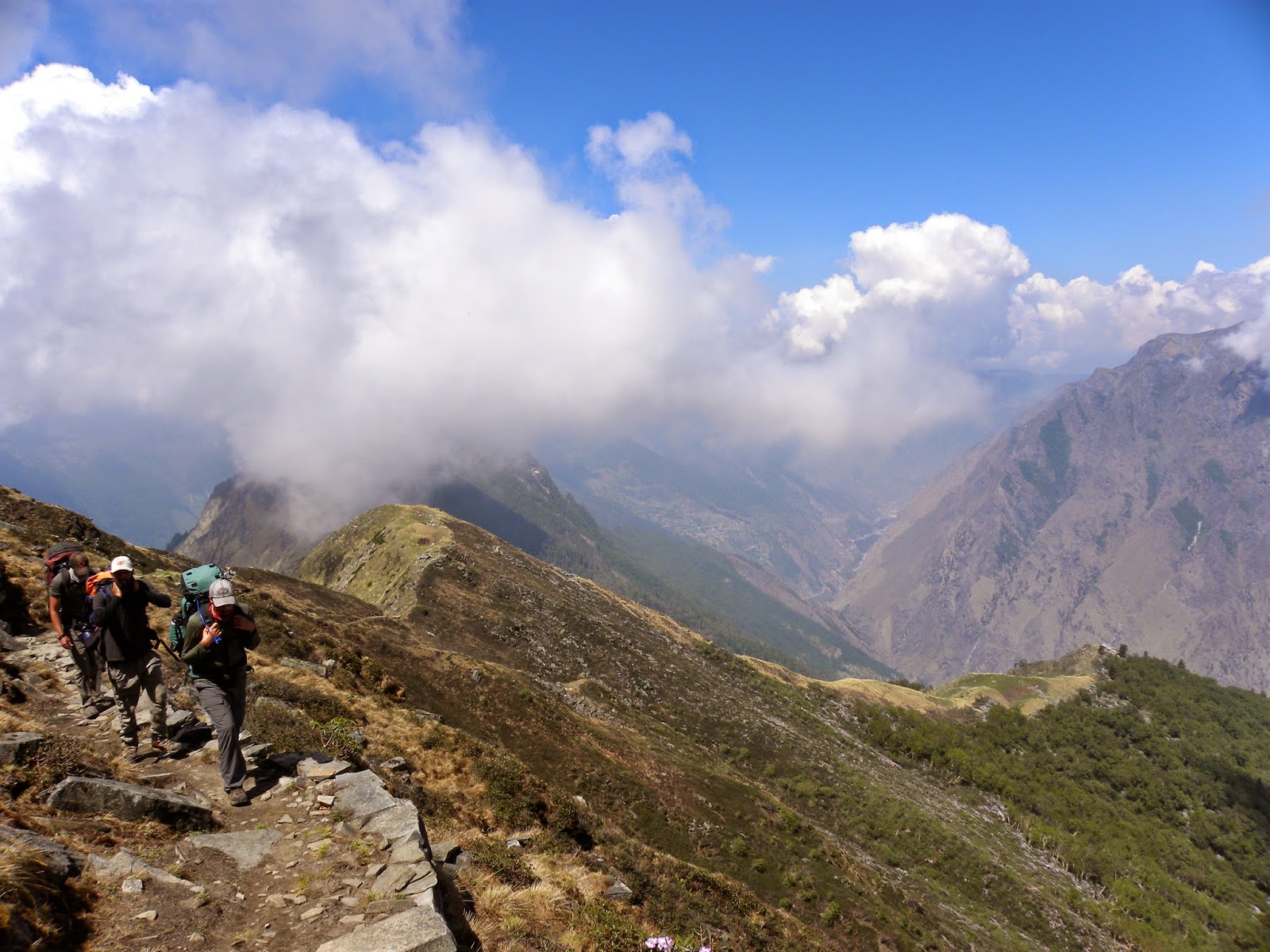
I have lots of things to teach you now, in case we ever meet, concerning
the message that was transmitted to me under a pine tree in North
Carolina on a cold winter moonlit night. It said that Nothing Ever
Happened, so don’t worry. It’s all like a dream. Everything is ecstasy,
inside. We just don’t know it because of our thinking-minds. But in our
true blissful essence of mind is known that everything is alright
forever and forever and forever. Close your eyes, let your hands and
nerve-ends drop, stop breathing for 3 seconds, listen to the silence
inside the illusion of the world, and you will remember the lesson you
forgot, which was taught in immense milky way soft cloud innumerable
worlds long ago and not even at all. It is all one vast awakened thing. I
call it the golden eternity. It is perfect.
We were never really born, we will never really die. It has nothing to
do with the imaginary idea of a personal self, other selves, many selves
everywhere: Self is only an idea, a mortal idea. That which passes into
everything is one thing. It’s a dream already ended. There’s nothing to
be afraid of and nothing to be glad about. I know this from staring at
mountains months on end. They never show any expression, they are like
empty space. Do you think the emptiness of space will ever crumble away?
Mountains will crumble, but the emptiness of space, which is the one
universal essence of mind, the vast awakenerhood, empty and awake, will
never crumble away because it was never born.
The world you see is just a movie in your mind.
Rocks dont see it.
Bless and sit down.
Forgive and forget.
Practice kindness all day to everybody
and you will realize you’re already
in heaven now.
That’s the story.
That’s the message.
Nobody understands it,
nobody listens, they’re
all running around like chickens with heads cut
off. I will try to teach it but it will
be in vain, s’why I’ll
end up in a shack
praying and being
cool and singing
by my woodstove
making pancakes.
Rocks dont see it.
Bless and sit down.
Forgive and forget.
Practice kindness all day to everybody
and you will realize you’re already
in heaven now.
That’s the story.
That’s the message.
Nobody understands it,
nobody listens, they’re
all running around like chickens with heads cut
off. I will try to teach it but it will
be in vain, s’why I’ll
end up in a shack
praying and being
cool and singing
by my woodstove
making pancakes.
Tuesday, July 22, 2014
Buddhism vs. Speed: Busyness is Laziness--- Reggie Ray


Life emerges out of the silence of our inner being. The life that we have in our mind, the life that is a reflection of our planning, the life that has been constructed out of bits and pieces in our environment—external conditioning, things we have observed in other people, things that influential people have told us—is actually not who we are.
That pre-planned life is rigid. It’s artificial. It’s unresponsive. It doesn’t reflect the life that we were born to live.
As a student of mine observed, obstacles—which are always with us—are not really obstacles when you work with them in the right way. And we have to work with them.
Many, many people tell me “I’m having a lot of problems doing this [meditation] practice because I am so busy. I’m really busy. I have a full life. It’s busy and I run from morning ‘til night.” People actually say that.
Now think about that for a minute. What kind of life is that? Is that a life worth living? Some people feel it is. America is probably the most extreme example of a speed-driven culture—and this is not my particular personal discovery, but something that has been said to me by many people from other traditional cultures. The first time this was said to me was when I was 19 and I went to Japan.
Western people are running from themselves and they use the busy-ness of their lives as an excuse to avoid having to actually live their own life. We are terrified of who we actually are, terrified of the inner space that is the basis of the human experience.
We are actually incapable of being alone—of any work that requires genuine solitude, without entertainment, that requires making a connection with the silence of the inner being. The American family engineers a life in which there is never any time alone, where we never have to actually talk to each other. Even dinnertime is around the TV, at best—or we’re just grabbing something at McDonald’s.
But it’s not the larger culture. It’s actually us. It’s me and it’s you. We load our life up to the point where it’s about to snap. And when you ask someone to sit down and be with themselves they go, “I can’t. I don’t have time for that.” Now you and I may realize that there actually is a problem. Most people don’t think there is a problem.
We run our kids in the same way—and it’s destroying them. The soccer practice and the music lesson and three hours of TV and homework—it goes on from the minute they get up until they go to sleep. They never have an opportunity to experience silence. Psychological development requires periods of solitude. Anthropological psychology—studying other cultures, as well as our own—shows that when children do not have completely unstructured time, when there are no parental expectations looming over them, they actually can’t develop normally.
We see this at higher levels of education, too. Even the unusual and gifted students at Naropa [University]. These people are disabled, in many cases, because they have lived a busy life, fulfilling all expectations that middle and upper-middle class parents lay on their children because of their fear. The underlying thing is fear of space.
We all have it. I have it in a major way. I am busy. I have all these things that I like to do. When one thing ends, the next thing starts. It’s all important and I have to do it and I don’t sleep enough. So we all have to take another look.
The problem with being busy is that it is based on ignorance—not realizing that by keeping your mind occupied constantly you are actually not giving yourself a chance. We even put an activity in our life, called meditation, where you practice not being busy. Think about it. It’s actually genius. You have added another thing on top of everything else you do, but you are pulling the plug for a period of time every day—so it actually has a reverse effect of opening up and creating space. So you are just going to be more busy now! But this is good, especially in Western culture. People put meditation on their To Do lists. This is something I tell my students: “If you don’t put meditation on the top of your To Do list, it will be at the bottom, and it won’t happen.” I find that if meditation is not the first priority of my day it won’t happen. You know if I am foolish enough to say, “Well, I have to make this phone call, check my email…,” then it’s over. Finished. “I’ll do it later.” It never happens. Look at your life and ask, “Am I being honest with myself? Is it really true that I don’t have time?”
When I was in graduate school I worked with a Jungian analyst, June Singer. She used to say, “Work expands to fill all of the available space.” The problem is not the amount of things you have in your life, it’s the attitude. It’s your fear of space. Busy-ness in the Tibetan tradition is considered the most extreme form of laziness. Because when you are busy you can turn your brain off. You’re on the treadmill. The only intelligence comes in the morning when you make your To Do list and you get rid of all the possible space that could happen in your day. There is intelligence in that: I fill up all the space so I don’t have to actually relate to myself!
Once you have made that list, it’s over. There is no more fundamental intelligence operating. So the basic ignorance is not realizing what we are doing by being busy. What we are doing to ourselves, what we are doing to our families, what we are doing to our friends.
When my daughter Catherine, who is now 24, was a newborn baby my wife Lee and I went home to my mother’s house. My father had already died. I grew up in Darien, Connecticut—the ultimate suburbia. Everyone works in New York and they are all busy. My best friend from high school came over with his wife, who was also a close friend of mine, and my godfather came over. This succession of people all came in…and Lee picked up on it right away, because she is from Alberta and out there, there is a lot of space!
These people…we loved each other. We were so close. But it was always the same: after 10 minutes they said, “Well, we got to run!” Every single one did the same thing. And Lee said to me, “What are they so afraid of?” Not one of them was actually present. It made me realize why I left the East Coast and went to India. “How far away can I get?” But these patterns are deeply ingrained in us, and running away is not going to solve the problem. It’s in us.
People on campus always say to me, “Gee, you must be really busy.” I could be standing there looking at an autumn tree. I say “No, I’m not busy, I have all the time in the world.” Now, I may not really feel that way—but somehow we have to stop this mentality. It’s sick. Literally. So I never say to my wife, “I’m busy.” Ever. I used to do it, but it didn’t evoke a good reaction. [Laughter]
“I’m too busy.” I am sorry. I don’t buy it. It’s self-deception: “I am too busy to relate to myself.” I don’t care if you have four children and three jobs—we have one human life. And if you can’t make the time, 15 minutes to relate to yourself, everyone else in your life is going to suffer. You have to realize that you are harming other people by making up excuses and not working on yourself. This is serious.
I do understand that things happen in life, and in the course of a week there are going to be times when you can’t practice if you have a job, a family. But to say that over a period of three months I can’t practice because I am too busy? That is the very problem that you came here to solve. I implore you.
My wife has developed some techniques to help with this problem. I am going to give them to you, and then I’ll ask her permission when I go home for lunch. [Laughter]
Being busy is tricky. We set up our life so we are busy. I do this to myself; this is one of my biggest obstacles. I get excited about things and agree to do things three months from now. But when the time comes I realize it is not a good idea because I can’t do it properly, because I have so much else going on. But I have no choice. I have to go through with it. “God, you idiot, how could you do that!” But getting angry doesn’t help, because there I am and I’ve got a 16-hour day I have to get through.
Unless you viciously carve out time to work on yourself it’s not going to happen. You have to be brutal about it, actually. If your mind is always busy then you have no sense of the world you live in. Because there is no communication, there is no space within which to see what we are doing. We will end up destroying our lives, and you may not realize what you have given up until you are on your deathbed. By being busy you are basically giving away your human existence.
One of the things about being busy is that it is a un-examined behavior. It’s habitual.
What’s the Point?
So when something comes up and you think “I need to do this,” the first question to ask is, “Why do I need to do this? What am I expecting to get out of this particular activity? What is the benefit going to be?”
A lot of times we actually don’t even think what we are going to get out of it, or what it’s going to accomplish. Amazing. Say I need to call so-and-so right away. Okay: “Why?” You’d be surprised. You think “Well, it’s obvious.” It isn’t. We have not thought through most of the things that we do at all. We haven’t looked at what the desired consequence is.
What are the Odds?
I may think I am likely to get something, and sometimes I do. But what is the likelihood that something is not going to happen? How sure am I that what I think I am going to get, will happen? What is the percentage of possibility?
Is Other Stuff Likely to Come Up?
This is the big one for me. Does this action have unforeseen karmic consequences? For example: I want to call up somebody and check on something. A lot of times they start telling me some terrible thing that has just happened. I’d allowed five minutes for this conversation, and 45 minutes later I am still on the phone. We do this all the time. We don’t look at the consequences of a particular action.
It’s like somebody who goes into a café, and there is this huge cheesecake right there. You could buy a slice, but you get a cappuccino and sit down with the entire cheesecake and start eating. Now, from a certain point of view this sounds like bliss. And maybe for a short period of time you are going to forget all the pain of the human condition. I mean, that is the great thing about cheesecake. [Laughter] It boosts your endorphins for 5 or 10 minutes. You feel great! But then, having eaten the entire cheesecake, you feel sick for the next three days.
Strangely enough, this is how we live our lives. We jump on things. Someone asks me, “Why don’t you come to Switzerland, teach for a few days and then hang out in the wonderful Alps?” By the time I get off the phone I am ready to pack. Then I talk to my wife. [Laughter] And she asks me, “Have you considered what a 17-hour trip is going to do to your bad back? Have you thought about that?” And then I get back on the phone. [Laughter]
But, because of our ambitions of all kinds, we are ready to fill our life up to the point where, even if I’m in Switzerland, nothing is different. This is one of the great discoveries: wherever I go it’s still lousy. [Laughter] It’s just me and my mind and I don’t feel good and I have got this work to do and I don’t have the energy. It’s the same story, no matter where I go or what I’m doing.
Except when I sit down and meditate. Then, I feel like I am creating an inner space so I can actually relate to the fact of what my life is, rather than just being in an out-of-control mode. So sit down and ask yourself, “What is important in my life, and what’s less important?” Almost on a daily basis, we have to look closely at the things that remain on our To Do list to see whether they are actually realistic.
Ten years ago, after I’d taught a Dathün—a month long meditation—some of the students said to me, “We feel bonded to each other and to you. We’d really like to keep going” And I said, “Well, we could start a meditation group.” And 10 years later I am trapped with a community of 200 people, called Dhyana Sangha. Now don’t get me wrong, it’s wonderful. But I got into it in a blind way. And there are many other things that I do not love in the same way that I get into blindly. We all do that all the time—and we wind up with a life that doesn’t work and isn’t helpful to others.
My ambition to accomplish things is going to be one of the last things to go. I can’t help it; it’s just the way that I am. I see a pile of leaves that need to be raked up and I start salivating. I love to do things. I love to be active. And you can say, “Well, that’s great.” But there’s neurosis in that. It’s a way of shutting out space. This is another thing my wife has taught me: when there’s no space nothing really happens.
I had a wonderful quotation by Chögyam Trungpa up on my wall during my [meditation] retreat. It goes something like, “If there isn’t a complete sense of openness and space, then communication between two people can not happen. Period. It’s that simple.” The communication we have with each other is often based on agendas: negotiating with other people to get what we want. That’s not communication.
My wife taught me that. Insistently. It’s to the point where that busy mind is just not acceptable in our house anymore. It doesn’t matter what’s going on my life. If she comes into my study, I have to be completely there. And that’s fabulous, because I’m never able to get invested in that neurosis. If I do, she’ll let me have it.
Giving up this state of busy-ness doesn’t mean that we aren’t going to be active, creative people. We’re giving up the mentality where you can’t actually relate to what’s in front of you because you have this mental speed going on. Let it go. I’m saying it to you. This is an issue that we are going to have to address if we want to be any good to anyone.
You’ll notice when you work in this way over a period of years—and this is something that I have discovered accidentally—the more you practice, the more you get done. If you sit for 2 hours in the morning, which is a lot for people, you will find that your day is 30 hours long. When you establish sitting, somehow, in your life—when you sit in the morning—your day takes care of itself. Things happen as they need to. There is a sense of auspicious coincidence throughout the day.
And when you don’t sit, things go to hell. [Laughter] Everything runs into everything. You say, “I don’t have time to sit ‘cause I have to do this email.” You run to your computer, turn it on and spend the next 4 hours trying to get your computer to work. This is just how things work.
Magic is actually very down to earth. It’s a part of our lives. It’s going on all the time, we just don’t see it. But when you actually take care of yourself, work with yourself and create openness in your life, life will respond by cooperating. And when you are unwilling to relate with yourself at the beginning of your day, your life is going to give you a hard time.
I got stuck on my first book, Buddhist Saints In India. If I wrote another book like that it would kill me. It was an unbelievable labor. I got stuck in the middle. So I started practicing more, I started doing long retreats. And the book started flowing. The more I practiced, the more the book happened. In a sense, when I meditated I was getting something good done.
I realized that the way you accomplish things in life—whether with family or going to work—is through practice. One hour of work with the practice behind you is worth two days when the practice isn’t there. Things just don’t work well—there’s too much neurosis in it. When I don’t feel busy, things I have to do fall into place. Going through my day with a sense of relaxation, I connect with people. I appreciate the outdoors when I walk to my car. I see the sky.
I encourage you to take a chance: put practice at the top of the list. Don’t make that call if it isn’t something that actually needs to happen—so many of the things we do is to make people like us. “I have to make this call or so-and-so is going to be upset.” I have a pretty good idea that if you do that you will find that there is plenty of time to practice, no matter how busy you are. Busy people will look at your life and go, “I don’t see how you can do it!”
Here’s a teaching that Chögyam Trungpa gave that has changed the way a lot of people look at their work lives: learn how to invite space into your worklife. The space itself will actually accomplish most of what you need to do. In the form of helpful people turning up, auspicious coincidences… And in so doing, you are not only opening up your self, you are opening up the world. It becomes a dance. It’s no longer your job to sit there for 10 hours doing your thing, it’s to respond to the way the world wants things to happen. It’s de-centralized.
In Buddhism, this is one of the paramitas: exertion. Exertion is tuning into the natural energy of the world. And when you tune in, you don’t get tired. You become joyful. That you are part of a huge cosmic dance that is unfolding, moment by moment. And you have to change your ideas of what you thought should happen. It requires flexibility on our part!
Busy-ness. It’s the most commonly mentioned obstacle that everyone faces, and I know for me it’s #1. So I thought it would be worthwhile spending a little time with it. I invite you to take a fresh look at your life. Relate to the fear that comes up when we are not busy. Am I still worthy? It’s that Calvinist thing, underlying our culture. But try letting go and lo and behold it’s a better human life, and much more beneficial for other people.
I hope I didn’t upset anybody by saying these things, but I can’t beat around the bush with you. I need to just lay things out as they come up.
The above is adapted from a talk Dr. Reggie Ray gave as part of his Meditating with the Body retreat.
Originally posted on The Elephant Journal
Subscribe to:
Posts (Atom)